
Yoga For Stress Relief: Which Practices Actually Help
If I had a euro for every time I heard this story: "I discovered yoga when I was on the verge of collapsing and it saved me, I could probably fund a retreat. In fact, this is how my own story began. I was overwhelmed at work, tried a gym yoga class one evening almost on a whim, and miraculously felt better afterwards. So I kept returning. Only years later did I recognise that those after-work sessions were a lifeline for someone quietly edging toward burnout.
I didn't become immune to stress. Even after years of practice and teacher training, I found myself on the same path - work-induced stress quietly taking over again. Sometimes it took a restorative retreat for me to realise I'd gone too far. Sometimes it was returning to a daily breath practice that made it visible again. There's no guarantee I won't find myself back on that path. Honestly, I probably will, that's life.
But there are practices I now keep close, small, daily ones that help me recognise the symptoms before they take over. So what actually works, and when?
How yoga reduces sress stress
Yoga is not a cure for stress, and it was not created to manage it. But within the practice there are elements that, over time and with consistency, help soothe an overloaded nervous system, and gradually make it easier to access that calmer, more regulated state when you need it most.
First, there's movement. Getting out of your head and into your body for an hour of asana practice does something that's hard to replicate elsewhere - it gives you perspective, and it teaches you how your body actually responds to stress. Moving in a group setting adds another layer: something about synchronised movement with other people, going back to those ancient times of communal dance and ritual, makes you feel less alone in what you're carrying.
Then there's breath, which is the most powerful tool in the practice. Whether you simply begin taking slower, deeper breaths or explore specific pranayamas like Ujjayi or alternate nostril breathing, these practices help downregulate your nervous system.
Finally, there's meditation, with a caveat. I wouldn't recommend diving into a sitting practice at the peak of stress. Trying to “quiet” your mind while you are feeling anxious or distressed may create more anxiety than it relieves. But practiced as a moving meditation, or as a few quiet minutes after pranayama, it will do more than you realise, even if you don't feel it straight away.
Nervous system regulating yoga classes
Going to a yoga class is always a good idea, but the type of class matters more than you'd think, and don't expect miracles after the first one. It’s called yoga practice for a reason, meaning that you’ll need to show up consistently.
In Ayurveda, yoga's sister science, there's a principle I've come back to again and again: like increases like. It sounds simple, but the implications are significant. If you're already stressed, overstimulated, and running on adrenaline, you will almost certainly be drawn toward more of the same - a fast-paced Rocket yoga, a hot yoga class, a HIIT session. The intensity feels familiar and it matches your current state.
Can those classes still help? Sometimes, it takes a genuinely skilled teacher to hold your nervous system steady in a high-intensity environment. Most of the time, you're just adding more fire to fire.
Ayurveda's advice, and my own, after years of practicing and teaching, is to go in the opposite direction. When you're stressed, overwhelmed, or anxious, choose something that soothes rather than stimulates. Yin yoga, restorative yoga, or a gentle vinyasa flow with a teacher who actually slows things down.
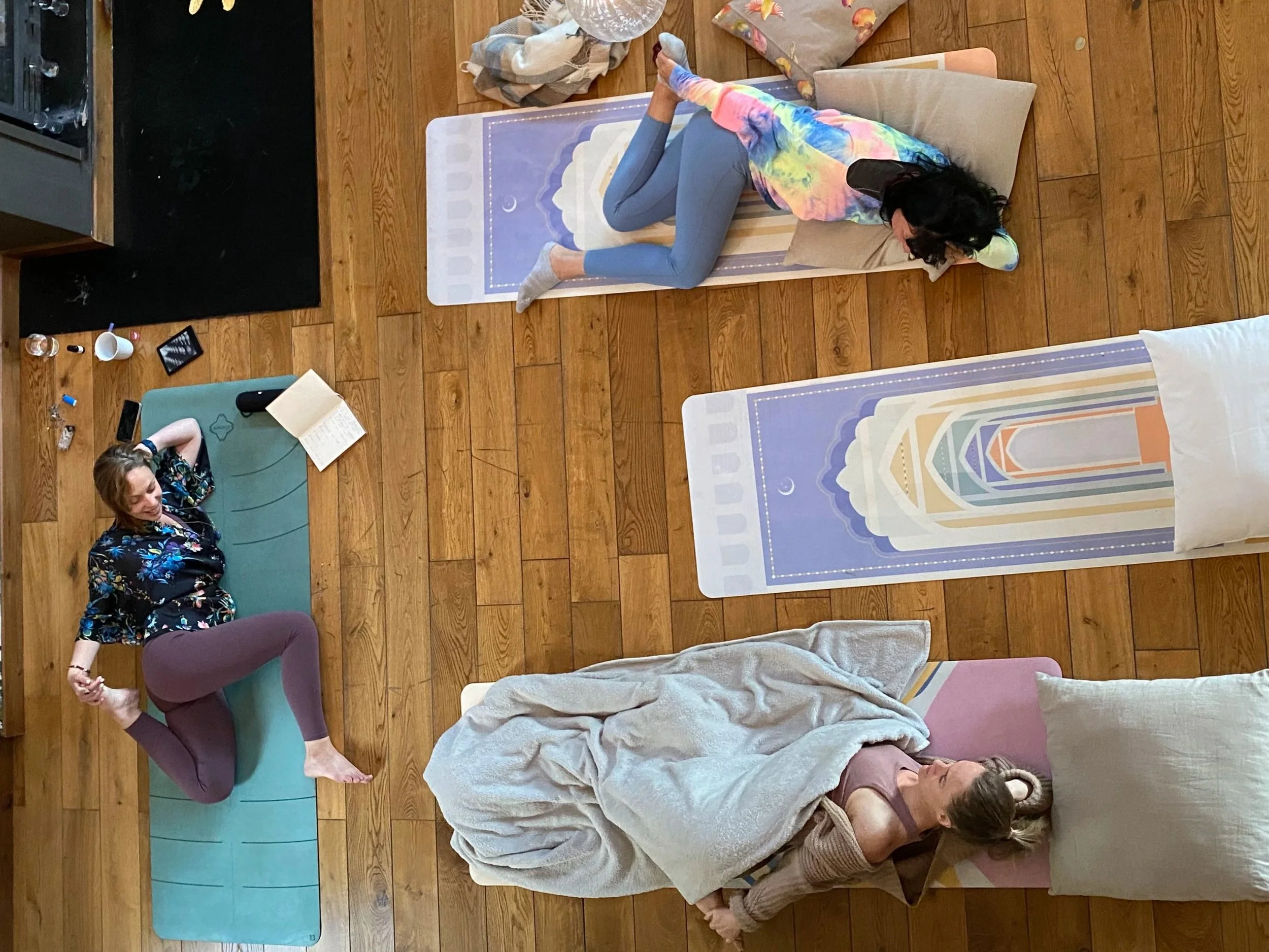
Yoga for work stress to try at home
When going to a class isn't an option and all you need is a few minutes to come back to yourself, these are my go-to practices.
Start your morning with mindful movement
When I cue my students to spend the first few breaths of class moving however feels good to them, they freeze. And I'm always struck by it, because it says something true about how disconnected we can become from our own bodies when we're running on stress and routine. So start your day withjust ten minutes of movement that you choose: cat-cow, hip circles, spinal waves, a couple of sun salutations. Gradually add whatever your body is asking for..
Three minutes of Ujjayi breathing
My absolute favourite practice, and one I did every single morning during my 200-hour teacher training: three minutes of Ujjayi breath daily. What surprised me most was how much more at ease I felt even when nothing about my workload or my situation had changed.
Breathe before the high-stakes meeting
Before you walk into a difficult meeting or presentation, spend two to three minutes breathing. It could be simple even breathing, sama vritti, Ujjayi, or alternate nostril breathing. If you'd rather be guided than go it alone, this mini breath practice for calm and clarity is exactly what you need.
Legs up the wall at the end of the day
Before you do anything else when you get home, before you start dinner, check your phone, or fall onto the sofa, go to the nearest wall and lift your legs up for seven minutes. It's one of the most underrated practices in yoga: gentle, passive, and remarkably effective at signalling to your nervous system that the day is done.
How to know which practice to choose and when
If it's an acute situation, a meeting, a presentation, a conversation you're dreading, a simple downregulating breath practice is enough. Two to three minutes of sama vritti or Ujjayi before you walk in will do more than you think.
If you're feeling that constant low-level stress buzz, the answer is consistency. Whether it's a weekly yoga class or a short practice at home, start building something into your day that anchors you. If you're losing sleep, add pranayama and legs up the wall to your evening wind-down routine before anything else.
If you're feeling completely depleted, dreading each day, running on empty, nothing left by midweek, it's time for practices that are genuinely nourishing. A restorative yoga class two or three times a week, online or in person, is a good place to start. Find space for profound rest in your routine before you start edging toward burnout, because burnout is considerably harder to come back from.
Final thoughts
Yoga will not fix a toxic job, an impossible workload, or a life that needs structural changes. It is not the answer to every stressful situation.
But it gives you a set of tools and a set of routines that help you recognise your patterns, soothe your body and mind when they need it, and stay connected to yourself even when everything else is pulling you away from that.
Yoga won't save you from stress. But practiced consistently and honestly, meaning the right practice for where you actually are, not where you think you should be, it will change your relationship with it.
If you're in Madrid and any of this resonated, come and try a class. I teach weekly yoga in English incorporating movement, breath and enough stillness to make a difference. Find the schedule here. And if you'd like to explore breath and meditation in your own time, I have free practices on Insight Timer whenever you need them.